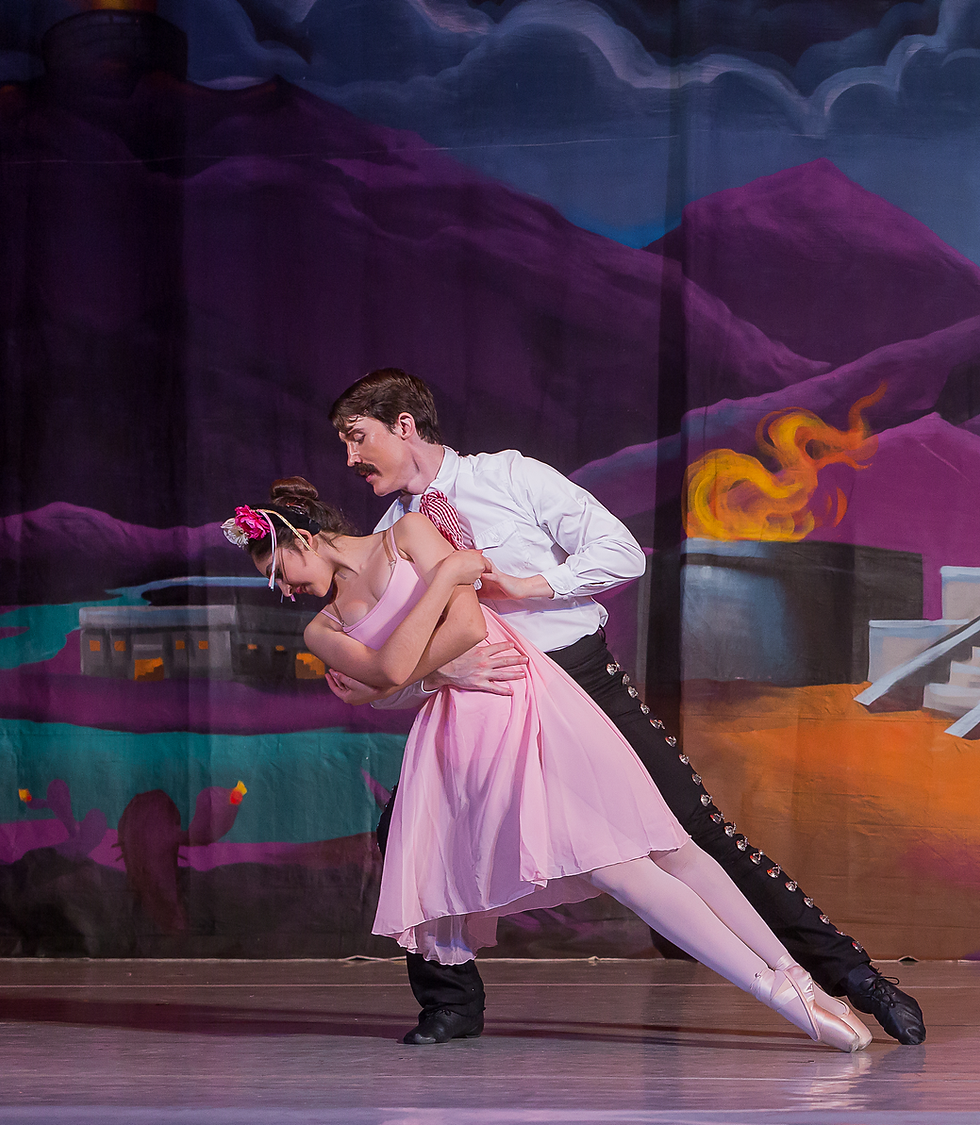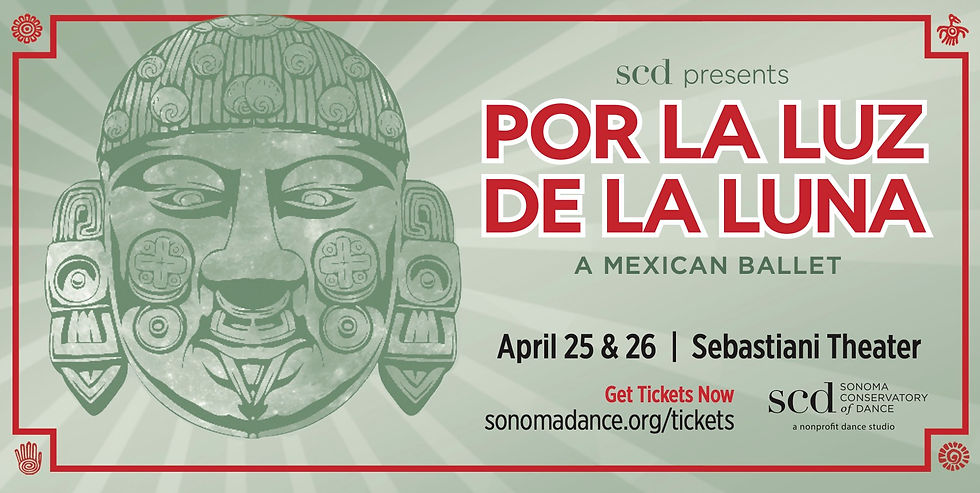
Blending classical ballet with folklórico traditions, Por la Luz de la Luna celebrates the beauty and richness of Mexican heritage while honoring the experiences of Mexican Americans. This is a story of identity, courage, and family, shining a light on the enduring power of traditions passed from one generation to the next.
This original ballet libretto was inspired by award-winning author and arts activist Aida Salazar’s story of her great-aunt, Jovita Valdovinos, who fought for religious freedom in Mexico’s Cristero War in the 1930s. Por la Luz de la Luna brings a fictional account of Jovita’s story to life, weaving history, mythology, and family legacy into a powerful theatrical experience while celebrating her heroism. As one of the few Mexican-themed ballets in history, it creates a space for dancers of all backgrounds to portray Latina/o characters, highlighting unique stories and honoring Mexican and Mexican-American heritage on stage. Set to 20th-century Mexican classical music by composers such as Carlos Chávez and José Pablo Moncayo, the ballet is brought to life through striking sets and Aztec-inspired costumes designed by visual artist PEMEX. It premiered on April 9, 2016, at the Sebastiani Theatre and continues to be a highlight of the company’s repertory.
36 SCD students, joined by alumni and community performers, have spent months in focused rehearsal training in both classical ballet and traditional folklórico to share this powerful story with our community. Audiences of all ages will be drawn into a world of folkloric rhythms, vivid storytelling, and national identity.
Content Notice: This production contains scenes referencing state violence, including by Border Patrol, which some individuals may find distressing.


As the full moon rises over a warm California night, a curious young girl listens as her mother’s stories awaken generations of courage, devotion, and legend—moonlit rebels fighting for freedom, young lovers crossing borders in search of hope, and an ancient goddess whose epic battle with the sun lights up the sky.
Credits
Ballet Libretto
Roberto Miguel, Isabelle Sjahsam, Patty O’Reilly
Fictional Interpretation Based on a story by
Aida Salazar
Music
Carlos Chávez, Blas Galindo, Candelario Huízar, José Pablo Moncayo, Manuel Ponce, Juventino Rosas, Silvestre Revueltas
Sets and Aztec Costumes
Visual Artist - PEMEX
Directed & Choreographed
Isabelle Sjahsam
Additional Choreography
Jesus “Jacoh” Cortes, Giselle Lara, Patricia O’Reilly
Creative Producer
Roberto Miguel

Additional Costume Design & Realization
Carol Del Aguila, Monica Furchi, Danielle Gehring-Leslie, Giselle Lara, Christina Lowery, Patty O’Reilly, Eva Reyes, Alicia Ringstad, Isabelle Sjahsam, Dana Van Meter
Special Thanks
Jesus “Jacoh” Cortes and Cuicacalli Dance School & Company, Martha Hernandez and Alberto the Historian of Museo del Periodismo y las Artes Graficas in Guadalajara along with Peter Boone, Lori Bremner, Eva Reyes, Xl1s, and the dancers who lent their dedication and creativity to the process
Synopsis
Prelude and Scene 1 ~ Jovita and the Cristeros
Little Lucila struggles to fall asleep on a warm California night. Moonbeams dance across her bedroom, and she is captivated by the moon’s magic. When her mother, Carmela, checks on her, she realizes that Lucila has never seen the full moon shining so late. Curious, Lucila asks what the moon is and why it looks so big. Carmela shares the stories of her ancestors, explaining how they honored the moon and the many traditions surrounding it. She tells Lucila of her great-great-grandmother, Jovita Valdovinos, who once cut her hair short under the moonlight, dressed as a man, and became a bona fide revolutionary, fighting for religious freedom during Mexico’s Cristero War. Lucila listens intently, her imagination bringing each story vividly to life.
Scene 2 ~ Crossings
A few years later, it has become a cherished tradition for Carmela to share family stories with Lucila on full moon nights. After asking many questions about her grandfather, Lucila finally hears the story of how her grandparents fell in love, how her Abuela Estela came to this country, and why she has never met her Abuelo Carmelo. Carmela begins by teaching Lucila a few folklórico steps from Jalisco, inviting her to imagine her grandparents dancing the same steps many years ago. Lucila becomes completely absorbed in the world of her grandparents’ youthful romance. Together, Carmela and Lucila visit their wedding in their imaginations, and Lucila learns that long ago, under the light of the full moon, Carmela’s parents crossed the border.
Scene 3 ~ Coyolxauhqui y Huitzilopochtli
Carmela tells Lucila about the beliefs of her ancestors from ancient times. Coyolxauhqui, a goddess who commands an army of Star Warriors, becomes enraged when her mother, Coatlicue—the Earth goddess—becomes pregnant after a plume of feathers falls from the sky. Coyolxauhqui leads her Star army to confront her mother, but before they can reach her, Coatlicue gives birth to Huitzilopochtli, the god of war. In the ensuing battle, Huitzilopochtli shatters Coyolxauhqui into pieces. Coatlicue then resurrects Coyolxauhqui as the moon and places Huitzilopochtli on the opposite side of the sky to become the sun.
Scene 4 ~ Wisdom
Carmela decides it is time for Lucila to try on the folklórico dress that has been passed down through generations in her family. With the loving guidance of her mother and grandmother, Lucila is carefully helped into the dress. As the fabric settles around her, she feels the weight of her family’s history—its strength, sacrifice, and resilience—while also sensing a deep well of empowerment rising within her. In this moment, Lucila begins to transform, stepping into her identity as a young Chicana woman rooted in heritage and wisdom.